

Publications
Discover the publications from the ECOSYSTEX community and its members.
Videos are available on ECOSYSTEX’s YouTube channel.
Filter by projects
- AEQUALIS4TCLF 2
- All 70
- CALIMERO 3
- CEMTex 1
- CISUTAC 6
- Colour4CRAFTS 1
- ECOSYSTEX 3
- EFFECTIVE 4
- HEREWEAR 3
- Hemp4circularity 1
- IMASUS 1
- IRISS 4
- LIFE TREATS 1
- My-Fi 2
- New Cotton 5
- PESCO-UP 1
- PROPLANET 8
- RegioGreenTex 17
- SCIRT 8
- SOLSTICE 5
- SUSTRACK 9
- T-Rex 7
- TRUSTEX 1
- VERDEinMED 1
- VETRINE 2
- Waste2BioComp 1
- tExtended 1

SOLSTICE's report on analysis of consumer research
This report aims to summarise findings about consumer behaviour related to circular textiles in the four territories: Catalonia, Berlin, Prato, and Grenoble as researched under the SOLSTICE project.

T-REX Project White Paper on Advancing Textile Circularity: Policy Recommendations for Implementing ESPR in the EU
T-REX Project released a white paper providing strategic recommendations for policymakers to facilitate a robust and sustainable textile recycling ecosystem in the EU.

Waste2BioComp’s report on benchmarking and technology watch
This report represents the final version of the Report on benchmarking and technology watch. It describes W2BC strategic benchmark and technology watch. Benchmarking strategic tool assists in the achievement of excellence, enabling improvement by borrowing and adapting the successful ideas and practices of organizations while avoiding unproven or problematic strategies.

SCIRT’s True Cost Calculator
Created as part of the SCIRT project, The True Cost Calculator is a self-assessment tool, developed to empower fashion professionals in efficiently measuring, comparing, and minimizing the environmental and social impact of garments across their lifecycle. It builds upon and enhances existing frameworks for evaluating the environmental and social costs of textiles. One of the most important features of the True Cost Calculator is its integration of financial, environmental, and social dimensions, monetizing the external costs associated with the lifecycle of clothing.

EU LIFE TREATS’s “Enabling Circularity”: a designer's guide to fiber recyclability
As part of the EU LIFE TREATS project, Lenzing Group and Södra have created a guide for designers and brands to enable circularity in textiles. The purpose of "Enabling Circularity - A designer's guide to fiber recyclability" is to share their experience of textile recycling, as well as its opportunities and limitations. Södra and Lenzing have a history of working together for over 10 years, developing textile pulp, and processes of textile recycling

CISUTAC’s guidelines for local embedding and link with CCRI
The work provides an overview of the key instruments within the reach of local and regional authorities to improve the circularity of textile material flows, especially via citizens and engagement.

CISUTAC’s decision support tool for post-consumer textiles on reuse and repair
The work conducted led to two main outcomes: the creation of a unique dataset comprising 30,000 PCT garments , and the development of an AI model. The dataset includes images and annotations for each garment, capturing the complexities introduced by wear, tear, and alterations during the user phase. Unlike existing datasets that focus on pre-consumer textiles, this collection provides a more realistic foundation for developing digital sorting solutions.
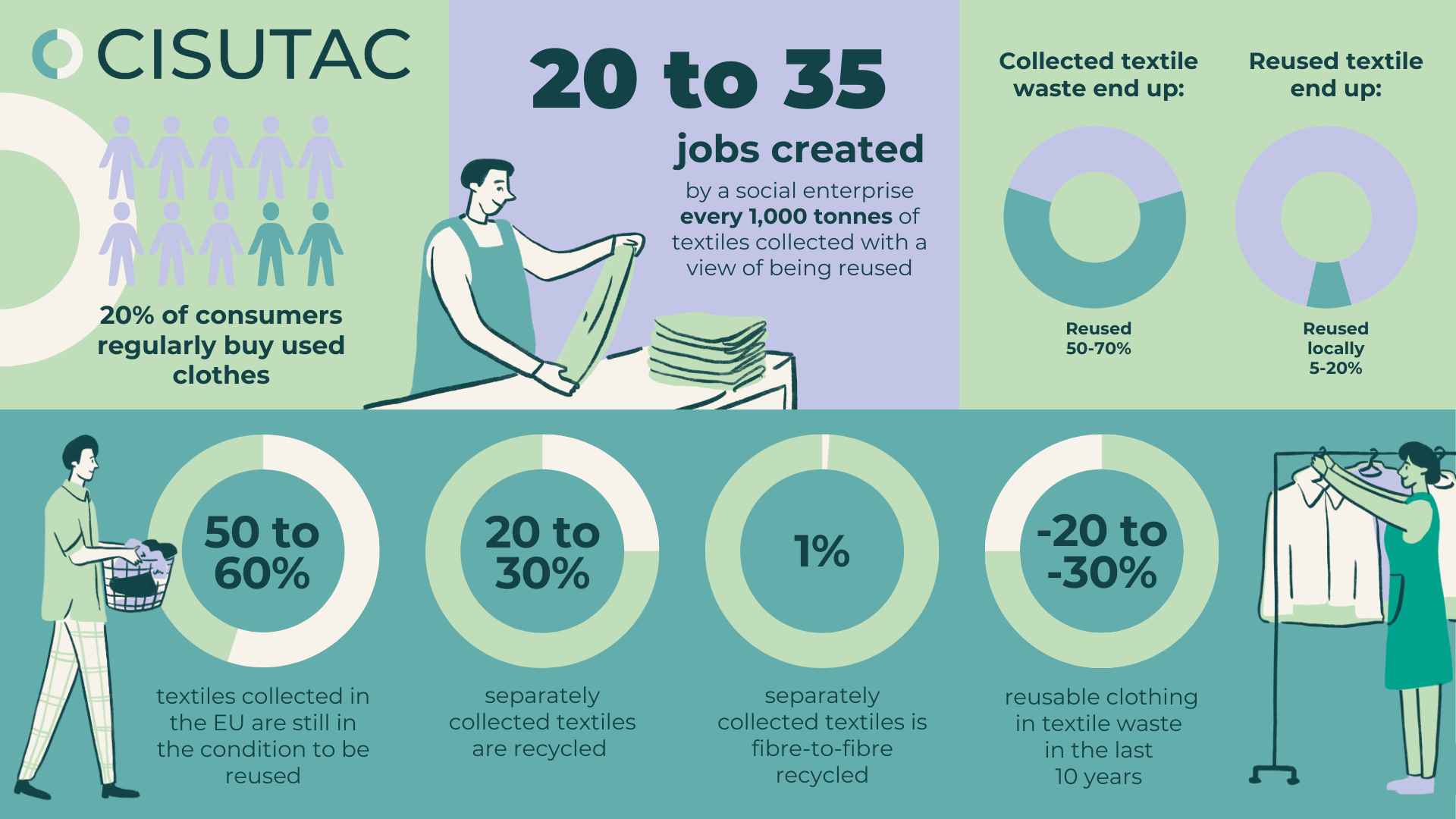
CISUTAC’s comprehensive overview of circular textile business models
The report analyses existing textile repair, reuse and recycling systems in the EU and the trends that influence their operation. Based on these findings, the research explores the reasons behind the difficulties observed and proposes solutions to overcome them. The report’s ultimate objective, aligned with the CISUTAC project’s goal, is to understand how to create an integrated circular textile value chain.

CISUTAC’s unlocking opportunities for circular business models in textiles: phasing out linearity
The aim of this report is to provide a comprehensive overview of circular textile business models. To this end, the report analyses existing textile repair, reuse and recycling systems in the EU and the trends that influence their operation. Based on these findings, the research explores the reasons behind the difficulties observed and proposes solutions to overcome them.

Colour4CRAFTS digital exhibition and virtual tour – “Seasons of Colours” (2024)
Output related to milestone (M14), public exhibitions, for EU funded project, Colour4CRAFTS (no. 101094809). The digital exhibition and virtual tour consist of content and objects displayed at the physical “Seasons of Colours” exhibition held from 10 June to 18 August 2024 at the Arktikum in Rovaniemi, Finland. The exhibition had over 6000 visitors. The digital exhibition and virtual tour can be viewed via the link provided.

Redesigning Value Chains with tExtended
This report designs a future textile ecosystem starting by understating the current textile value chains and their challenges. Through the implementation of circular economy principles, knows as R-strategies, the report redesign them to enable sustainable production, use and reuse of textiles, as well as sustainable end of life options and recycling.

Learnings and recommendations from the New Cotton Project
Upon completion, the pioneering New Cotton Project shared eight recommendations for making circular fashion a reality. Read more in the article by Brooke Roberts-Islam, writer, author, consultant and Founder of TECHSTYLER.

SUSTRACK’s mid-term policy brief: policy priorities to support the sustainable transition and examples of good policies
This policy brief discusses which barriers exist that need to be addressed through new policies and policy improvements to support the transitioning to a Circular Biobased Economy (CBBE). It summarises what the limitations are of the linear fossil-based economy, it then discusses how it has become embedded in the EU policy.

RegioGreenTex’s mapping and gap analysis of value chains for sustainable and circular textiles
The deliverable focuses on mapping and gap analysis of value chains for sustainable and circular textiles. While linear value chains are fairly straightforward, the move towards circularity opens up a wide range of new options for building value chains, for example by considering reuse, upcycling or all recycling options. This adds complexity and creates new types of obstacles.
SUSTRACK’s advancement of sustainability assessment knowledge-draft
This report focuses on the development of new indicators applicable for monitoring and evaluating the transition to circular bio-based systems
SUSTRACK’s report on the prioritisation of the identified limits, as well as the preliminary guidelines and policy recommendations
This report aims to prioritize barriers hindering the transition to circular bio-based economy (CBBE) and identify interdependencies among them, based on the work documented in D1.1 and D1.2. These findings lay the groundwork for policy actions, ensuring a smoother transition to circular bio-based economies.
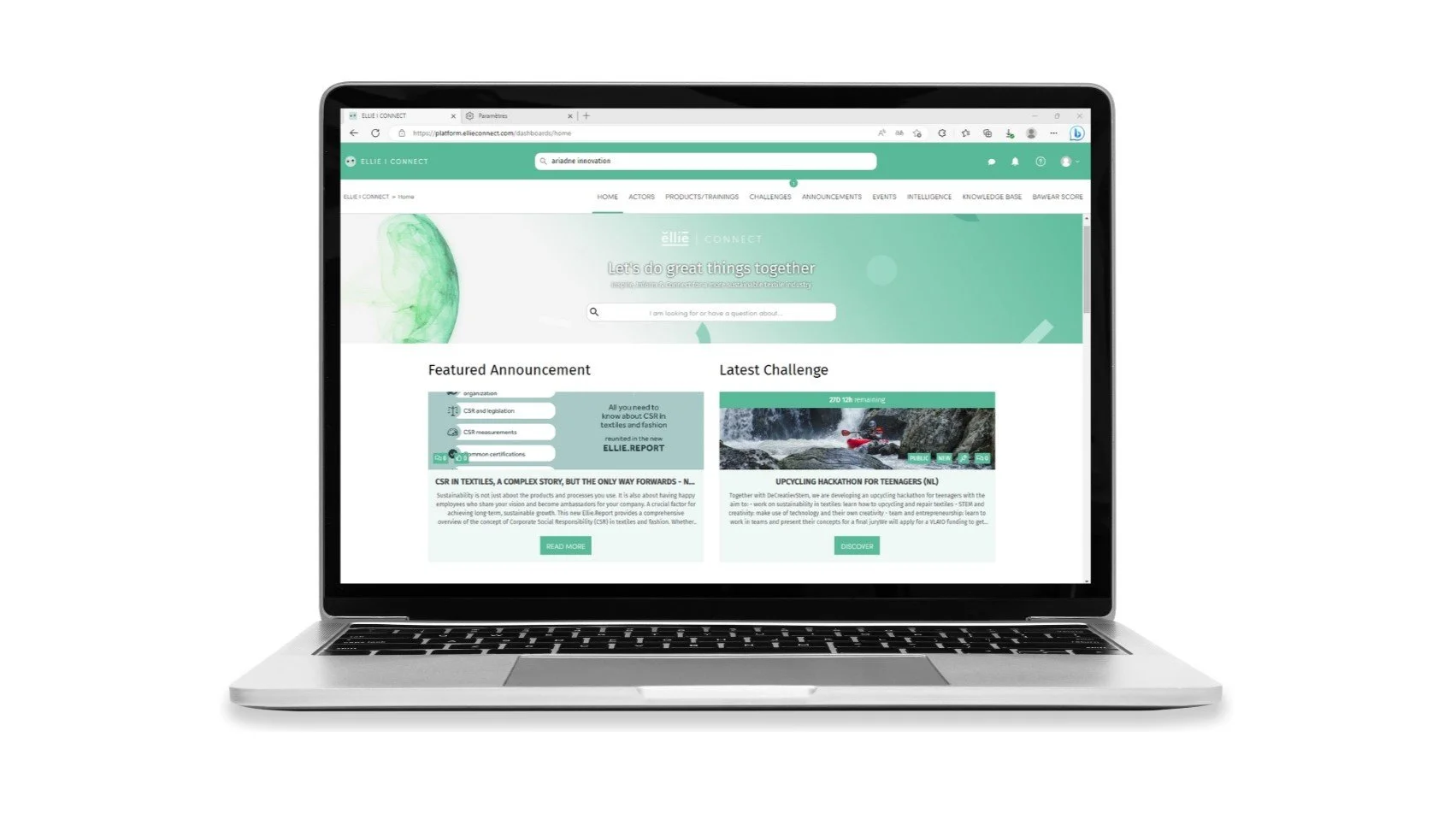
RegioGreenTex’s Digital Self Assessment Tool
The self-assessment tool is developed to help profile SMEs and evaluate the recycling potential of their products and processes. The self-assessment tool supports businesses by giving feedback and suggestions for the next steps to be undertaken and- the support needed to grow and match with other SMEs, as part of the ecosystem. This tool must help the SMEs to detect their own capacities and shortcomings, identify coaching or training needs, provide links to complementary partnerships, benchmarks, and improve their strategies and approaches to eco-design, waste management and recycling.

PROPLANET Deliverable D.6.5: End-of-Life strategies and activities for enhanced safe and sustainable coatings
Deliverable D.6.5 of the PROPLANET project presents tailored End-of-Life (EoL) strategies for each innovative coating, aligning their life cycles with circular economy principles. It addresses coatings, PFAS-related risks, circular economy concepts, and eco-friendly management approaches to promote sustainable industrial practices in line with EU objectives.

PROPLANET Deliverable D.6.2: LCA, sLCA, and LCC Assessments in enhanced safe and sustainable coatings for supporting the planet
Deliverable D6.2 of the PROPLANET project establishes revised methodologies for Life Cycle Assessment (LCA), Social Life Cycle Assessment (sLCA), and Life Cycle Costing (LCC), integrating the latest scientific and European advancements.

RegioGreenTex’s Pilot actions on regional hub ecosystem level
The RGT Hubs' prime functions and ongoing actions reveals a focus on creating circular textile value chains, attracting and de-risking investments, offering SMEs access to infrastructure, and fostering a community of cross-fertilization for SMEs. The recommendation is for all hubs to continue and learn from successful actions, especially focusing on functionalities not yet implemented. Special attention is advised for actions related to attracting individual (SME) investments and enhancing competences in management and operations.