

Publications
Discover the publications from the ECOSYSTEX community and its members.
Videos are available on ECOSYSTEX’s YouTube channel.
Filter by projects
- AEQUALIS4TCLF 2
- All 126
- CALIMERO 3
- CEMTex 1
- CISUTAC 9
- Colour4CRAFTS 1
- ECOSYSTEX 3
- EFFECTIVE 4
- Green-Tex 1
- HEREWEAR 3
- Hemp4circularity 1
- IMASUS 1
- IRISS 4
- LIFE TREATS 1
- My-Fi 2
- New Cotton 5
- PESCO-UP 1
- PLASTICE 4
- PROPLANET 8
- REDOL 3
- RegioGreenTex 15
- SCIRT 8
- SEiSC Project 1
- SOLSTICE 5
- SUSTRACK 9
- T-Rex 7
- TEX-BREIN 1
- TRUSTEX 13
- VERDEinMED 1
- VETRINE 2
- W4TEX 3
- Waste2BioComp 1
- WhiteCycle 2
- tExtended 1
W4TEX’s “Be A Manager” e-learning platform
The “Be A Manager” e-learning platform is a comprehensive training resource consisting of 12 insightful and interactive modules exploring management concepts and principles applicable to the textile sector and beyond. It delves into the fundamental skills that someone holding a managerial position should have and it addresses multiple ways to acquire or optimise them.

WHITECYCLE bridging medieval wisdom and modern tech: what 13th-century ragpickers can teach us about recycling PET
Originally delivered as a presentation at the ARTEMIS Conference, this piece connects the dots between medieval textile networks and cutting-edge plastic recycling, and describes how the WHITECYCLE project is using enzymes and APIs to rebuild the kind of circular economy that medieval regions across Europe once ran on touch and trust.
TRUSTex's Draft Deliverable Market and consumer trends
The report, aims to present an in-depth analysis of current conditions and dynamics within the textile sector. It provides an analysis of market structures, consumer behaviours, and trends in the textile sector.
TEX-BREIN’s capacity building programme
The TEX-BREIN project has completed its capacity building programme of 12 webinars, designed to enhance the skills of stakeholders across the textile recycling value chain.
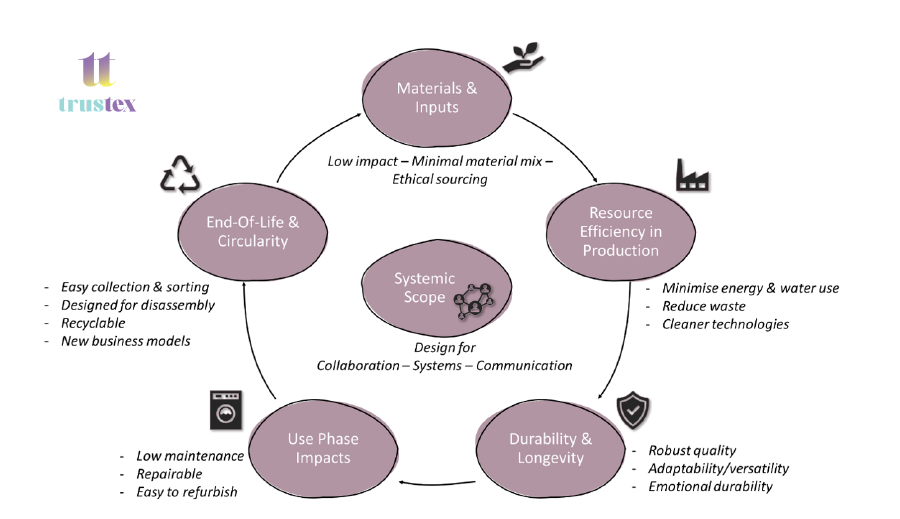
TRUSTex's Draft Overview of textile eco-design strategies
This draft deliverable provides an overview of ecodesign strategies for textiles within the TRUSTex project, combining literature review, stakeholder insights, benchmarking and use case development (jeans and trekking jacket). It aims to bridge the gap between theoretical frameworks and industrial implementation.
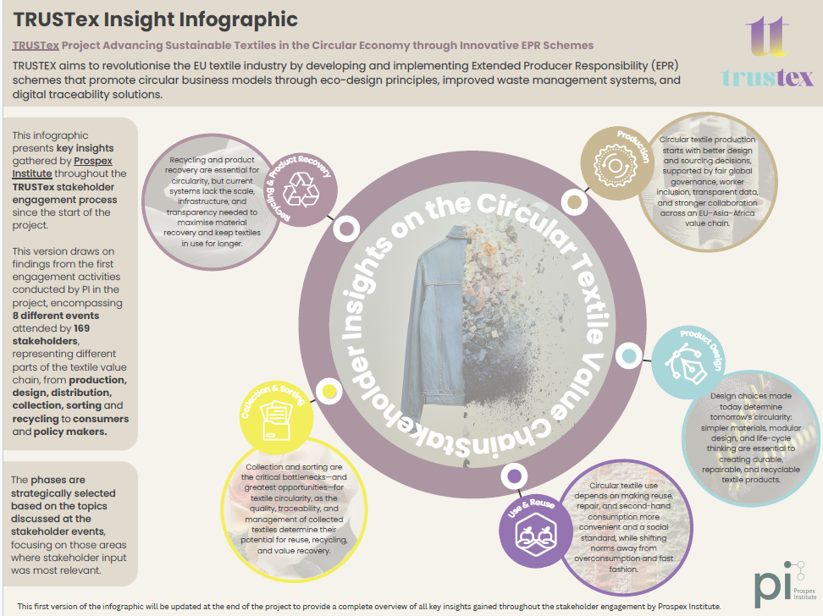
TRUSTex's Draft Insight Infographic
Draft Deliverable 5.1 Insight Infographic presents the first edition of the TRUSTex stakeholder insights on the circular textile value chain. It summarises the key findings from the first phase of stakeholder engagement activities conducted between October 2025 and June 2026, including Stakeholder Boards, Hotspot Solution Finders and Citizen Panels.
TRUSTex's Draft EPR reporting requirements
This draft report summarises the possible indicators/scoring that could be used to monitor the transition from a linear to circular and sustainable textile industry.
W4TEX’s Women Think Green toolkit
The WomenThinkGreen toolkit from W4TEX includes different materials to inspire and educate about the green transition in the textile and fashion industry.
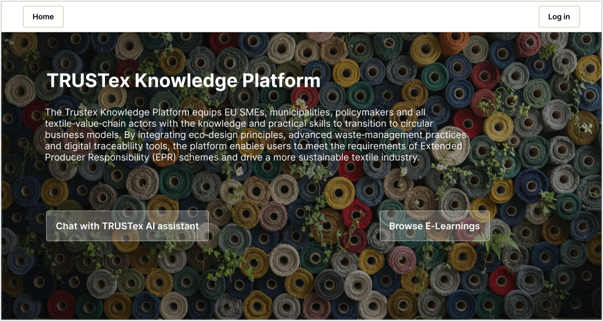
TRUSTex's Draft Capacity Building Programme outline
This draft document presents the programme outline for the TRUSTex Capacity Building Programme. The programme supports key actors across the textile value chain, including SMEs (small and medium-sized enterprises), municipalities, and policymakers. It equips them with the knowledge needed to understand and respond to EPR (Extended Producer Responsibility), the DPP (Digital Product Passport), and the transition to a circular economy.
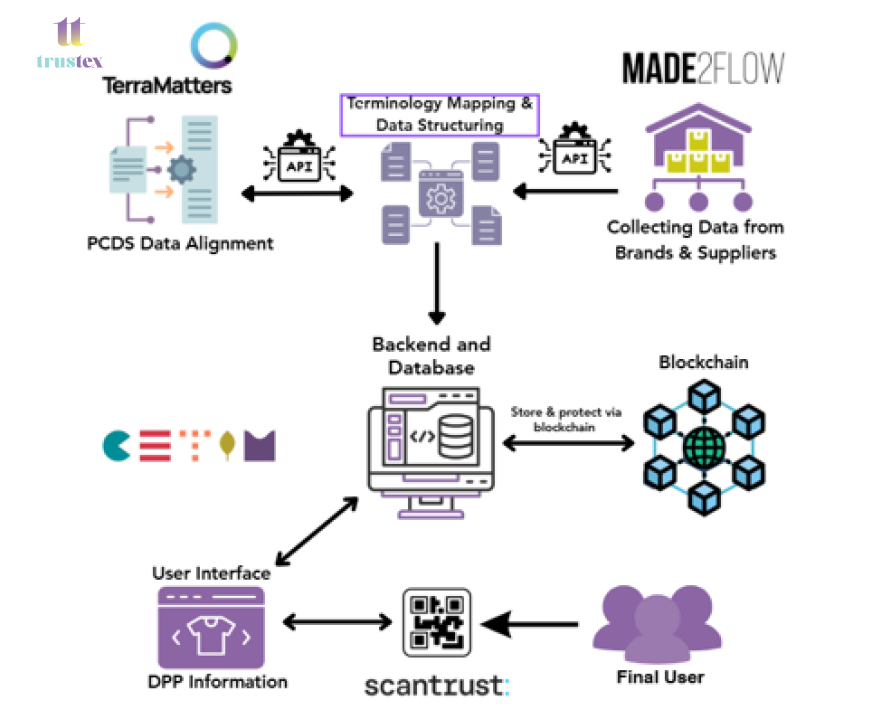
TRUSTex's Draft DPP Infrastructure Description
This draft deliverable presents the blockchain-based Digital Product Passport (DPP) infrastructure within the TRUSTex project to support secure and transparent traceability in textile value chains.
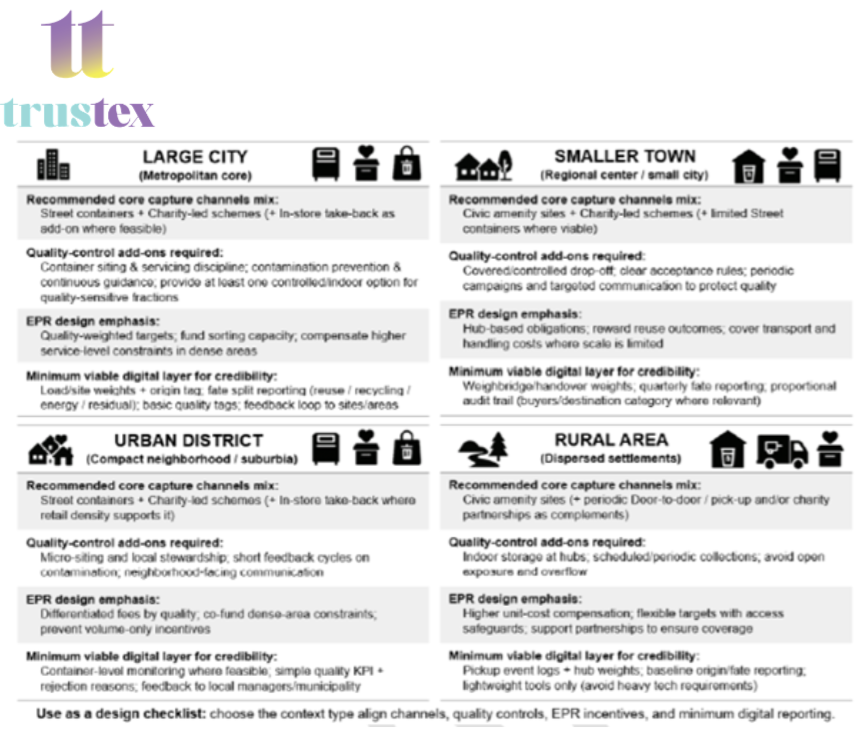
TRUSTex's Assessment of separate collection strategies
This deliverable assesses separate collection strategies for postconsumer textiles and examines their implications for reuse, end-of-life treatment, and emerging textile EPR implementation.

WhiteCycle’s Policy recommendations: Driving circular innovations in technical textiles: Strengthening sustainable industrial value chain
This policy brief, delivered at the mid-term stage of the WhiteCycle project, aims to provide policymakers with an overview of the challenges and key recommendations identified by the project consortium that are affecting the deployment and implementation of the projects related to complex and technical textiles circularity. It focuses on identifying critical enablers and barriers within the current and future policy landscape that influence the success and scalability of similar initiatives.
W4TEX’s 'Ideathon' materials and templates
The W4TEX project developed and demonstrated innovative 'ideathon' events for engaging with learners, especially focused on those coming from the project target groups of women and migrants. The materials, templates, and a trainers guide are available, along with descriptions of how these events were carried out in both national and transnational contexts around Europe.
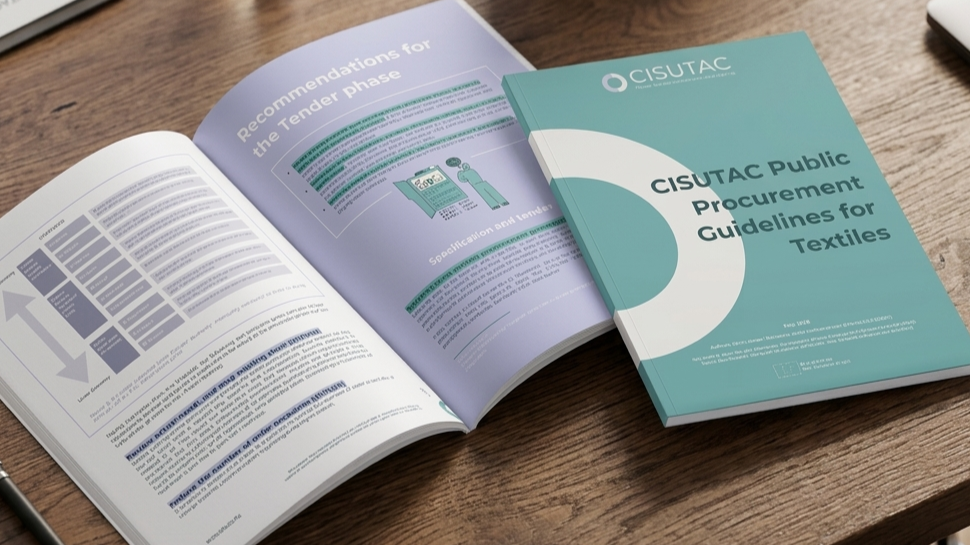
CISUTAC’s Public Procurement Guidelines for Textiles
CISUTAC guidelines support contracting authorities in integrating circular economy principles into the procurement of professional textiles, with a focus on workwear, uniforms and PPE. They provide practical recommendations, tools and good practices across the full procurement cycle and builds on existing European, national and regional guidance, as well as insights from EU-funded projects and stakeholder consultations.
Green-tex Solutions
The Green-Tex Solutions publication presents the outcomes of the Interreg Danube Region project Enhancing Danube Green Textiles and Garment Production and Consumption (Green-Tex), showcasing nine practical circular economy solutions tested across three pilot areas: (i) smart textile waste collection, (ii) wider use of natural fibres and (iii) green fashion design. Implemented across nine Danube Region countries, these solutions demonstrate transferable approaches that support the transition to a circular textile economy and facilitate the adoption of Extended Producer Responsibility (EPR) systems.
Teachers training MOOC
Adaptive Teaching Excellence: Cultivating Sustainable Entrepreneurship through Digital Innovation
TRUSTex's Draft Deliverable - Governance aspects of the DPP in the textile sector
The report addresses the data management requirements of actors in the textile sector when aligning their strategies and operations with the objectives of the 'Textile Strategy' and their implementation in the ESPR with regard to the DPP.
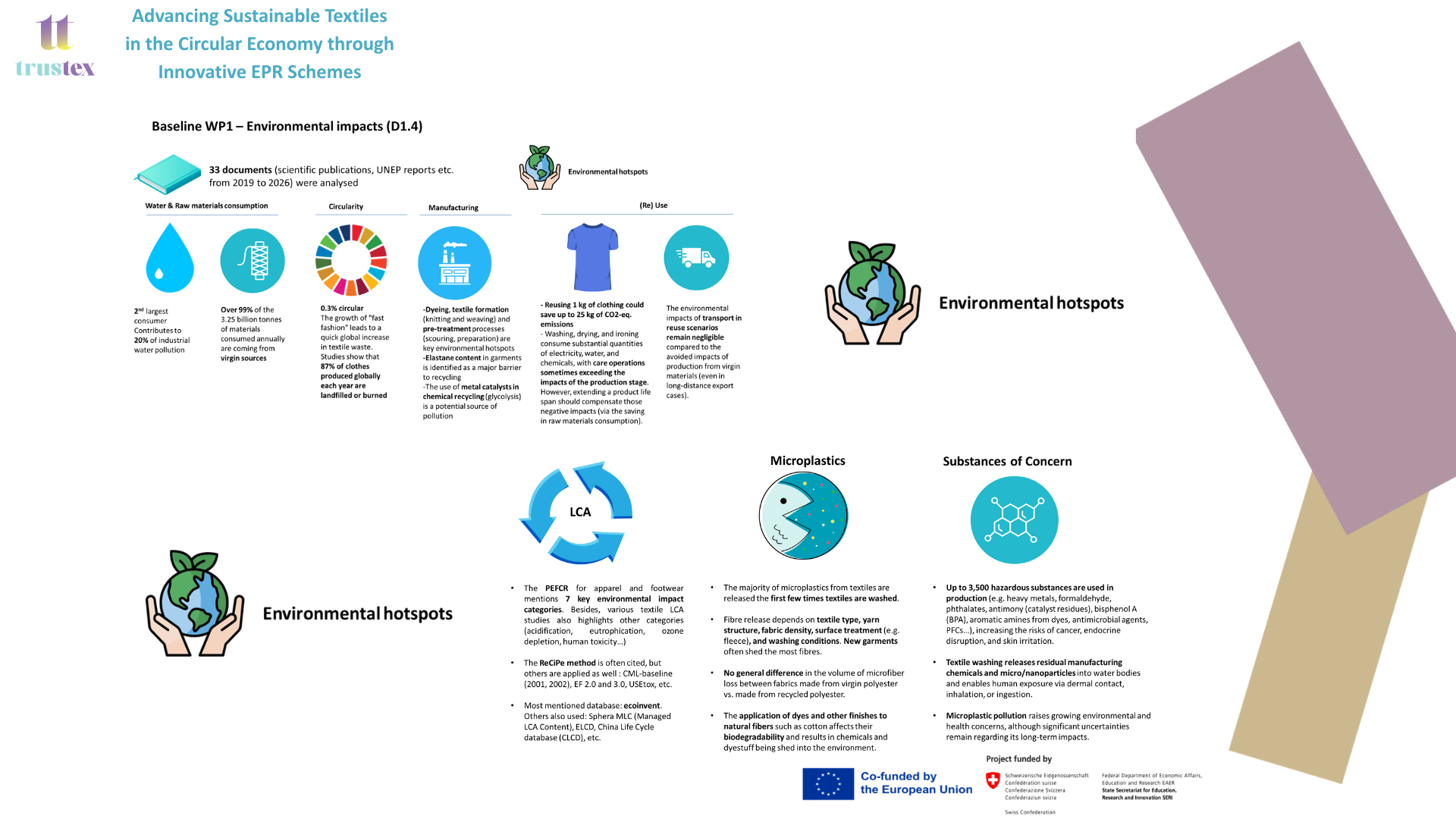
TRUSTex's Draft Deliverable Environmental impacts
This deliverable presents the main learnings from the literature analysis which was
focused on the following aspects: environmental hotspots (in terms of life cycle stages as well as of environmental impact categories), Life Cycle Assessment (LCA)
methodological choices, impacts related to the release of microplastics and substances of concern, and eco-design insights in the textile sector.
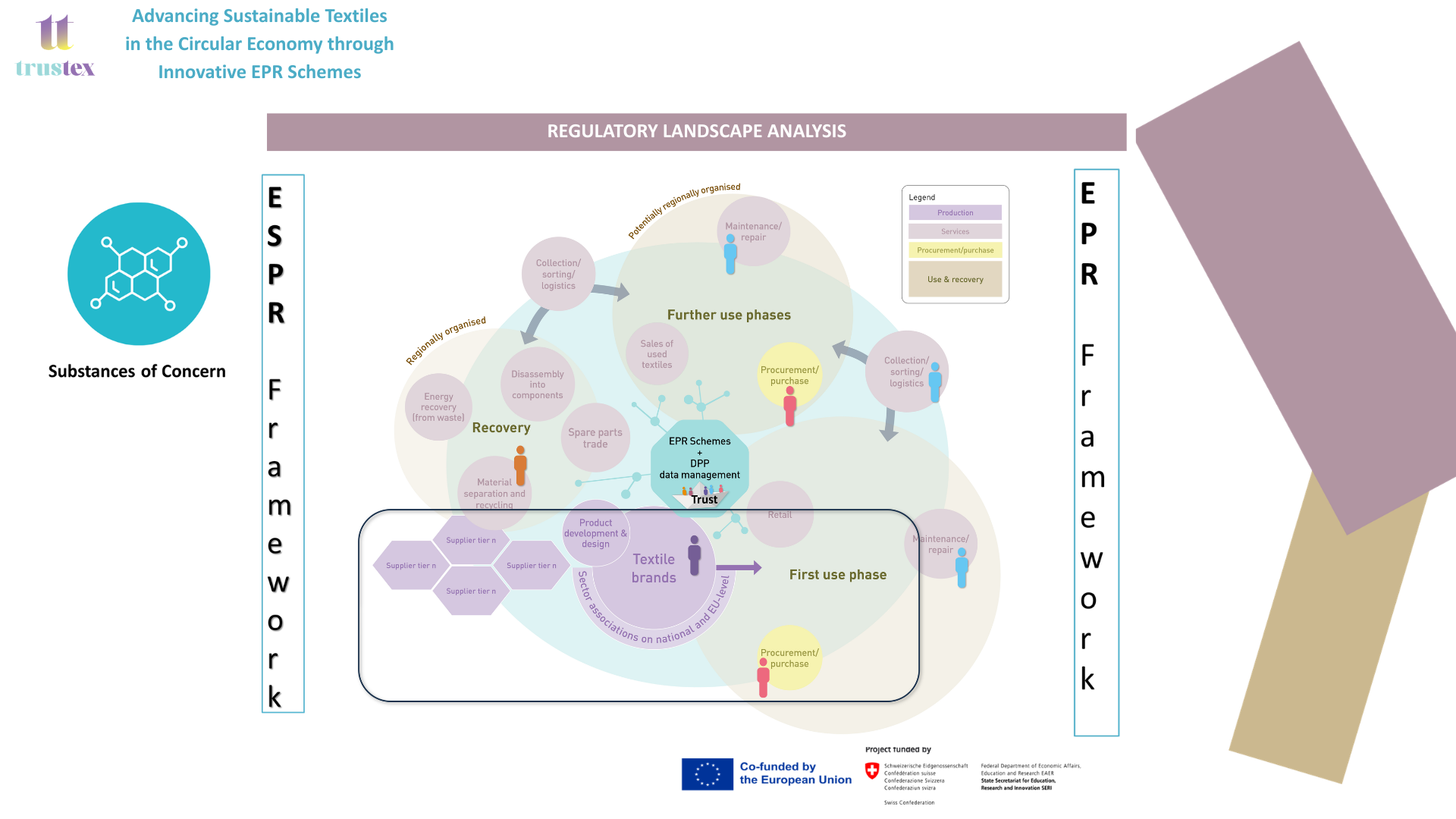
TRUSTex's Draft Deliverable - Regulatory Landscape Analysis Report
This document evaluates and maps the current and future regulatory framework in the EU, Member States and in third countries affecting textile waste, digitalisation, and sustainability. The Regulatory Landscape Analyse (RLA) looks into how the regulations, initiatives and strategies enable or hinder the circularity strategies. It also contains a draft list of potential SoC under ESPR regulation.
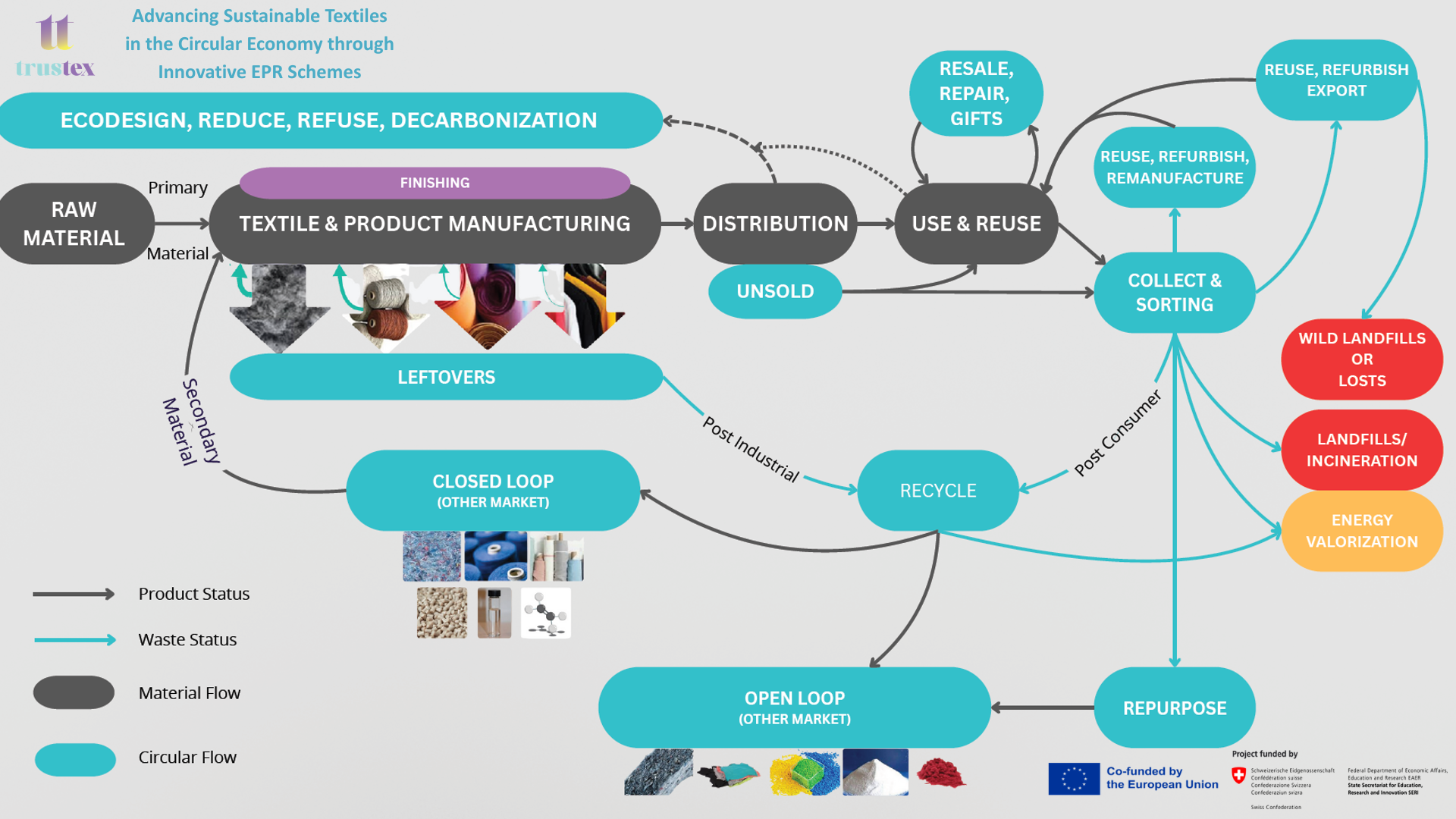
TRUSTex's Draft deliverable on Material flow and circular model analysis
The deliverable provides a structured analysis of the textile value chain and identifies key barriers and improvement pathways toward circularity. The objective is to establish a shared analytical framework for the TRUSTex project, enabling a systemic understanding of material flows, value retention opportunities and structural bottlenecks across the sector.