

Publications
Discover the publications from the ECOSYSTEX community and its members.
Videos are available on ECOSYSTEX’s YouTube channel.
Filter by projects
- AEQUALIS4TCLF 2
- All 118
- CALIMERO 3
- CEMTex 1
- CISUTAC 9
- Colour4CRAFTS 1
- ECOSYSTEX 3
- EFFECTIVE 4
- Green-Tex 1
- HEREWEAR 3
- Hemp4circularity 1
- IMASUS 1
- IRISS 4
- LIFE TREATS 1
- My-Fi 2
- New Cotton 5
- PESCO-UP 1
- PLASTICE 4
- PROPLANET 8
- REDOL 3
- RegioGreenTex 15
- SCIRT 8
- SEiSC Project 1
- SOLSTICE 5
- SUSTRACK 9
- T-Rex 7
- TEX-BREIN 1
- TRUSTEX 8
- VERDEinMED 1
- VETRINE 2
- Waste2BioComp 1
- WhiteCycle 2
- tExtended 1
TRUSTex's Draft Deliverable Literature Review on Socio-Economic Impacts
This consolidated deliverable brings together six literature reviews—three grey literature reviews and three systematic literature reviews. The evidence examines the socioeconomic impacts and third-country externalities associated with global textile circularity systems, with a focus on African textile reuse flows, post-consumer circularity in the EU, and sustainability transitions within global value chains.

Publishable report on the solutions and demo development (D5.6)
PDF deliverable from the PLASTICE project (WP5) reporting on the chemical recycling of cotton/polyester textiles via enzymatic hydrolysis. It covers NIR-based sorting of textile waste, lab-scale optimisation of the enzymatic process, the pilot-scale demo, and the spinning and knitting of recovered polyester into new fabrics, closing the fibre-to-fibre recycling loop.

Guidelines for the design of process and products towards circularity (D7.1)
PDF deliverable from the PLASTICE project (D7.1) providing ecodesign guidelines for two material streams: cosmetics plastic packaging and textiles. The textile section covers EU regulations and Ecolabel criteria, ecodesign guidelines for synthetic fabric production from recycled PET, compliance evaluation of project partners SUN TEKSTIL and KORTEKS, and a recyclability assessment framework for textiles.
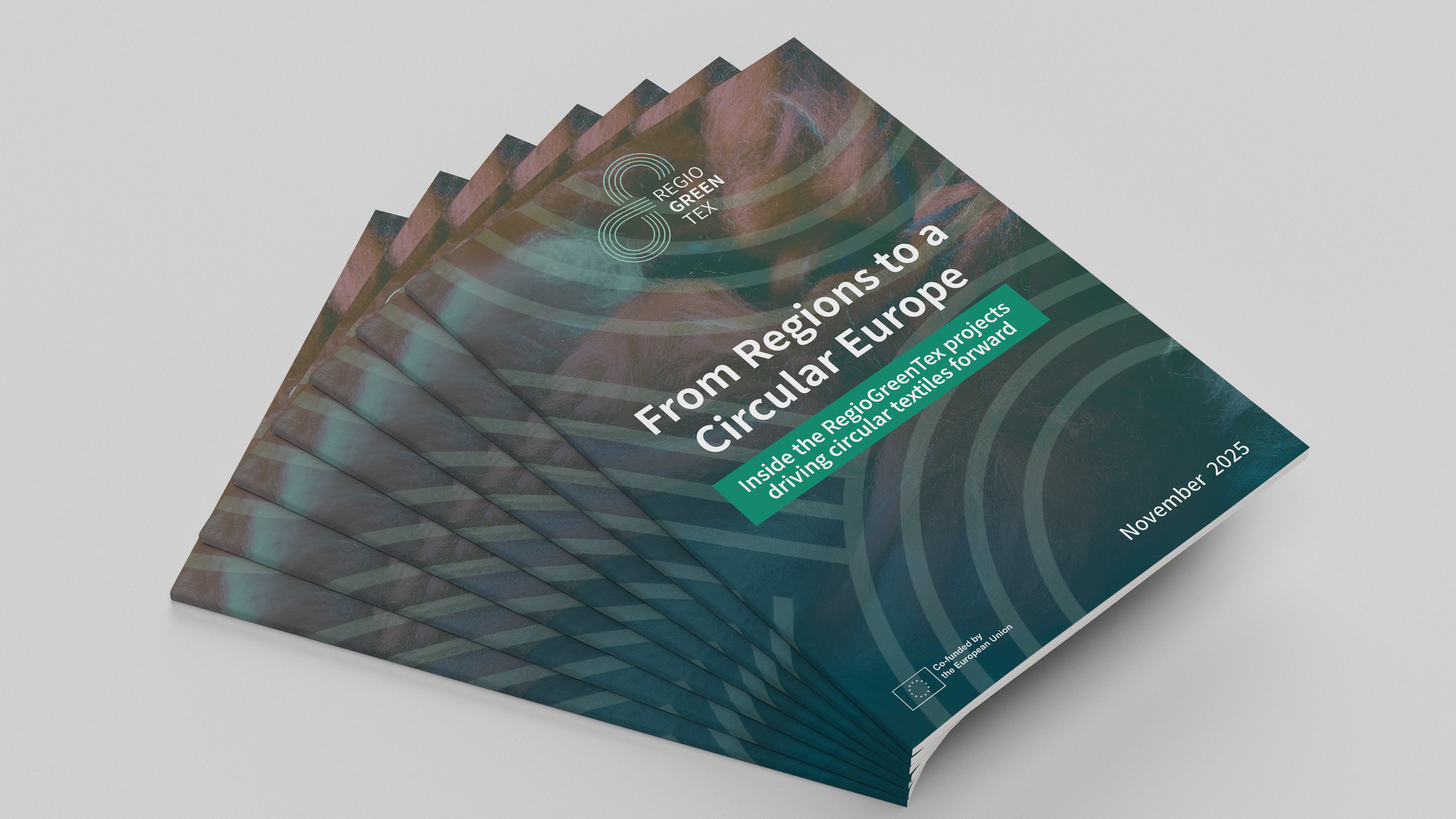
RegioGreenTex: From Regions to a Circular Europe
This brochure summarizes pilot results, highlighting progress, impact, and scale-up opportunities, while guiding companies and regions toward collaboration and market adoption.
RegioGreenTex: Textile Circularity Guide – for a circular textile future
As part of the RegioGreenTex project, the Textile Circularity Guide outlines how textile waste can be turned into resources through circular business models, digital tools, and collaboration. It provides practical strategies, business development tools, digital solutions, and showcases successful European collaborations.
AEQUALIS4TCLF project: D3.5 EU TCLF Skills Strategy
The EU TCLF Skills Strategy sets a shared direction for developing the skills that the sector needs to thrive in the green and digital transitions. It identifies key gaps, proposes coordinated actions for industry and education, and aims to ensure that companies can access the talent they require while workers benefit from new opportunities.

RegioGreenTex's Italian GreenTex Hub: Boosting Circularity in Textile Sector Services and Opportunities from Italian Textile Ecosystems
This deliverable is a practical guide to driving circular transformation across the textile value chain, providing tools and frameworks for companies, associations, and policymakers to scale sustainable practices effectively.
The NTT Textile Waste Sorting System
Video explaining the sorting solutions developed for textiles waste within REDOL.
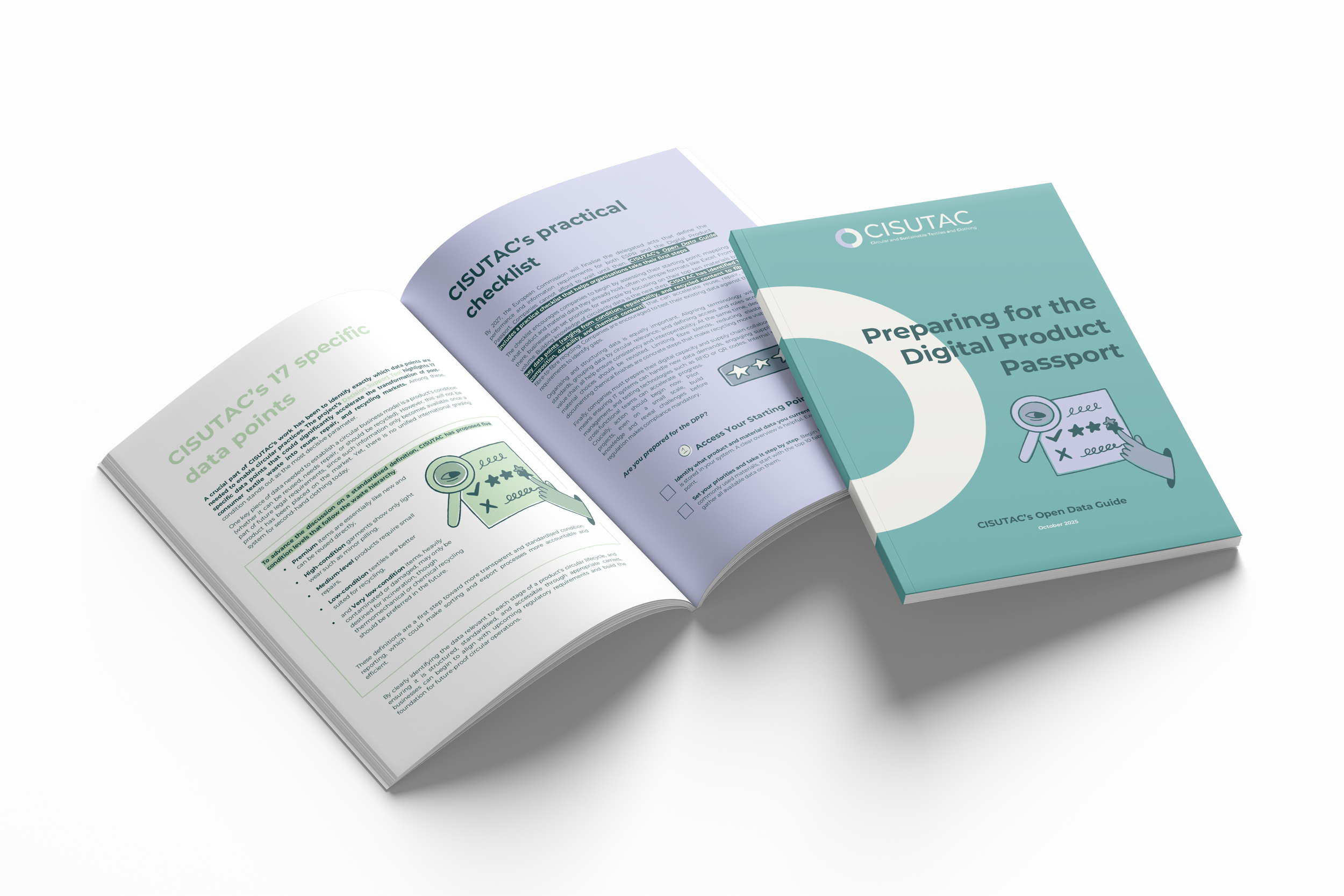
CISUTAC’s Open Data Guide
The guide explores how the textile industry can overcome the critical bottleneck of insufficient data accessibility, laying out practical steps for brands, recyclers, and other stakeholders in the value chain to prepare for the forthcoming Digital Product Passport under the Ecodesign for Sustainable Products Regulation.
Advances of REDOL automated sorting and classification technologies
This document focuses on the developments and activities carried out as part of Work Package 3 “Upgrading the management of solid urban waste streams” of REDOL project, in the period of M09 to M32. The main objective of this work was to achieve the improvement of different waste flows in REDOL value chains by designing and developing various technical and digital solutions. The targeted value chains are plastics, packaging, Construction & Demolition Waste (CDW), textiles and waste of electric and electronic equipment (WEEE). Based on that, five different technologies were developed for all the different value chains.
Advances of REDOL SUW valorisation technologies
The main objective of this deliverable is to design and test, under controlled conditions, a set of innovative recycling and valorisation prototypes for different streams of Solid Urban Waste (SUW), aiming at its inclusion in circular and symbiotic value chains. These prototypes are tailored to the specific characteristics of each waste type.

RegioGreenTex: The Circular Garment
Read more and watch the documentary to see how RegioGreenTex created ‘The Circular Garment’, a durable, unisex piece made from recycled fibers using innovative, circular textile techniques, developed through collaboration across 12+ SMEs and research centers in 8 European regions.

RegioGreenTex: Circular Economy Quiz
Test your knowledge with the RegioGreenTex interactive ‘Circular economy quiz’ and deepen your understanding of sustainable textiles.
T-REX project report: business models & financial viability
As part of the T-REX Blueprint for scaling textile-to-textile recycling in Europe, this report presents key insights from the Techno-Economic Assessment (TEA) on the business viability of circular textile systems.

T-REX life cycle assessment & plastic leakage analysis report
As part of the T-REX Blueprint for scaling textile-to-textile recycling in the EU, T-REX presents a summary report of the Life Cycle Assessment (LCA) and Plastic Leakage Analysis conducted by consortium partner Quantis.

Green VETRINE free online course
Green VETRINE has been developed by leading European training organisations in the textile and clothing sector, and delivers a European certificate for successful completion. The course is also available in seven languages.

T-REX’s technical guidance for recyclable garments
This guidance brings together key insights from research conducted during the T-REX project, offering practical, detailed advice on how to create recyclable garments while stepping away from the mono-material approach.

T-REX project reveals textile recycling blueprint
Following the successful completion of the 3-year innovation programme, the T-REX Project is pleased to present its recommendations for the scaling of textile-to-textile (T2T) chemical recycling in Europe.

T-REX Project Report: Piloting a data model for textile-to-textile recycling
The textiles industry faces major environmental challenges, from high carbon emissions to overwhelming amounts of post-consumer waste. To tackle these issues, the T-REX Project has been working to build a blueprint for a closed-loop system for textiles.

SOLSTICE's Territory Profile: Catalonia
The SOLSTICE project, funded by the EU’s Horizon Europe programme, aims to tackle the textile industry’s challenges by piloting circular solutions in Catalonia.